
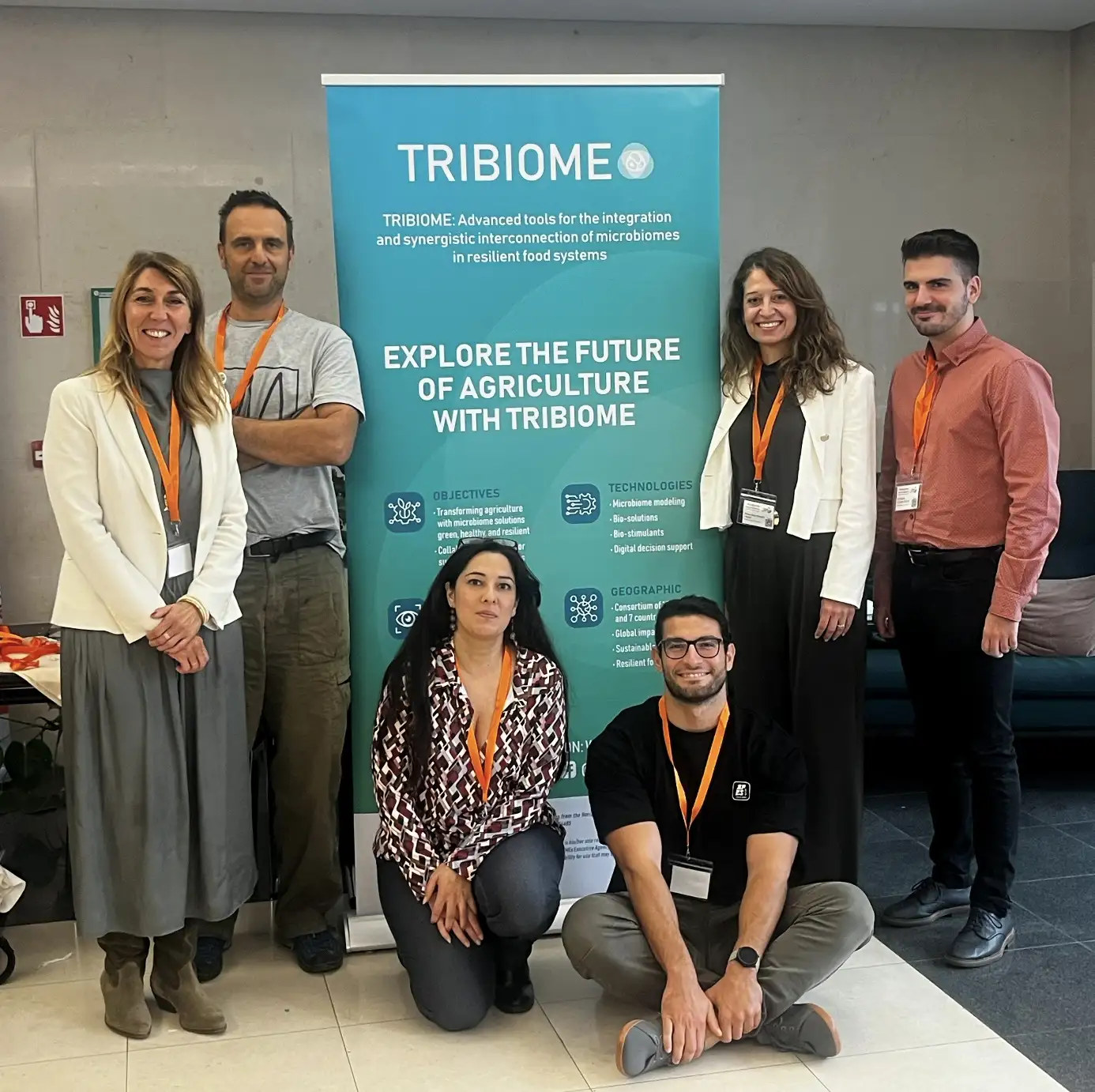
How can microbiome research translate into practical solutions for more resilient agriculture and sustainable food systems? On 1 October 2026, TRIBIOME joined 7 other EU-funded projects in Brussels to share progress, discuss barriers to implementation and identify priorities for research and policy.
The hybrid workshop, “Harnessing Microbiomes for a Sustainable Food System: From Farm to Fork and Beyond”, was co-organised within the Microbiomes4SustainableFoods (M4SF) Cluster. It brought together researchers, policymakers, industry representatives and other stakeholders to explore microbiomes across the food system, connecting soil and plant health with food production, animal health and human well-being.
An opening contribution from Giuseppina Luvarà, Policy Officer at the European Commission’s DG Research and Innovation, placed these discussions within the wider European food research agenda. Her presentation highlighted the importance of a One Health approach, closer integration across research disciplines and clearer pathways from scientific evidence to practical application.
Our project is connecting soil microbiomes with resilient wheat production
Rosa Doménech, from ITENE, presented TRIBIOME’s approach to using soil–plant microbiome knowledge to support resilient wheat production and healthier food systems.
The presentation covered progress in identifying beneficial microorganisms, testing microbiome modulation strategies in greenhouse and field conditions, and developing digital decision-support tools. These activities connect scientific discovery with agricultural practice, while considering environmental performance and wider food-system effects.
Stakeholder engagement remains central to this approach. Involving farmers, researchers, industry and policymakers helps ensure that the solutions developed respond to practical needs and that the evidence generated can inform future uptake.
Shared challenges across the food system
The eight project presentations illustrated the diversity of microbiome research, from crop resilience and soil health to fermentation, food preservation and the valorisation of agricultural side-streams.
Two roundtables examined the challenges facing sustainable and resilient food production, and the development of safe, innovative and healthy foods and feeds. Across these discussions, several shared needs emerged, meaning reliable evidence of efficacy and safety, more consistent methodologies and data, access to pilot-scale infrastructure, and regulatory pathways suited to microbial solutions.
For agricultural applications, participants highlighted the importance of demonstrating performance under local farming conditions and involving farmers early in development. For food applications, discussions emphasised the need to understand microbial behaviour in different food matrices and during scale-up, alongside safety and consumer acceptance.
Building the conditions for lasting impact
The closing session brought these exchanges together around 5 policy-oriented priorities: recognising microbiomes as a resource across food systems, connecting stakeholders and infrastructures, harmonising evidence and assessment methods, demonstrating solutions under real-world conditions, and clarifying proportionate regulatory pathways.
For TRIBIOME, the workshop strengthened cooperation with related European projects.
The M4SF Cluster outlined plans for continued collaboration through webinars, communication activities and joint scientific events, helping the knowledge and networks developed within individual projects contribute to longer-term impact.
Watch the workshop recording