
Tribiome’s project, advanced tools for integration and synergistic interconnection of microbiomes in resilient food systems
Objective of the project
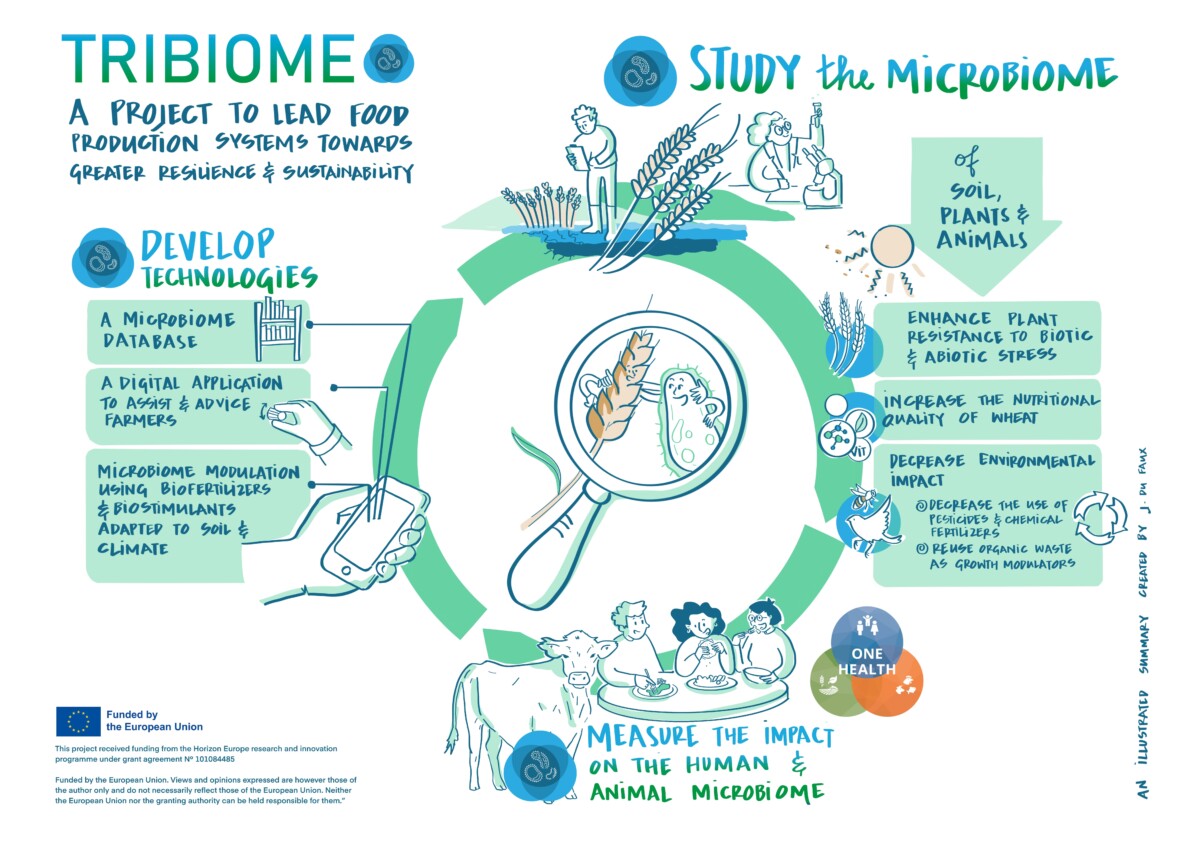
Tribiome’s vision is to develop and implement a systemic solution to transform current food production systems. To this end, Tribiome aims to advance alignment with the Green Deal and Farm2fork strategies, by deepening the knowledge of soil/plant/animal and human microbiomes, as well as their interrelationships and interconnections, so that they can play a leading role in the resilience of food production systems in the near future.
Tribiome will face the main challenges such as the need to minimize resources, reduce the environmental impact and promote healthy and plant-based food chain while feeding a constantly growing world population under the paradigm of climate change.
This project aims to drive this concept from its base, establishing its central nucleus in current agricultural production systems based on the relevancy of the soil and plant microbiome. In order to produce more with less, through knowledge of microbial biodiversity and its interaction with the plant, novel technologies will be developed to influence its modulation (i.e., those enhancing plant growth, nutrient use efficiency, abiotic stress tolerance, …).
One of the other objectives is to generate an upgrade quality food and have a positive influence on the microbiomes of both animals and humans.
Our approach
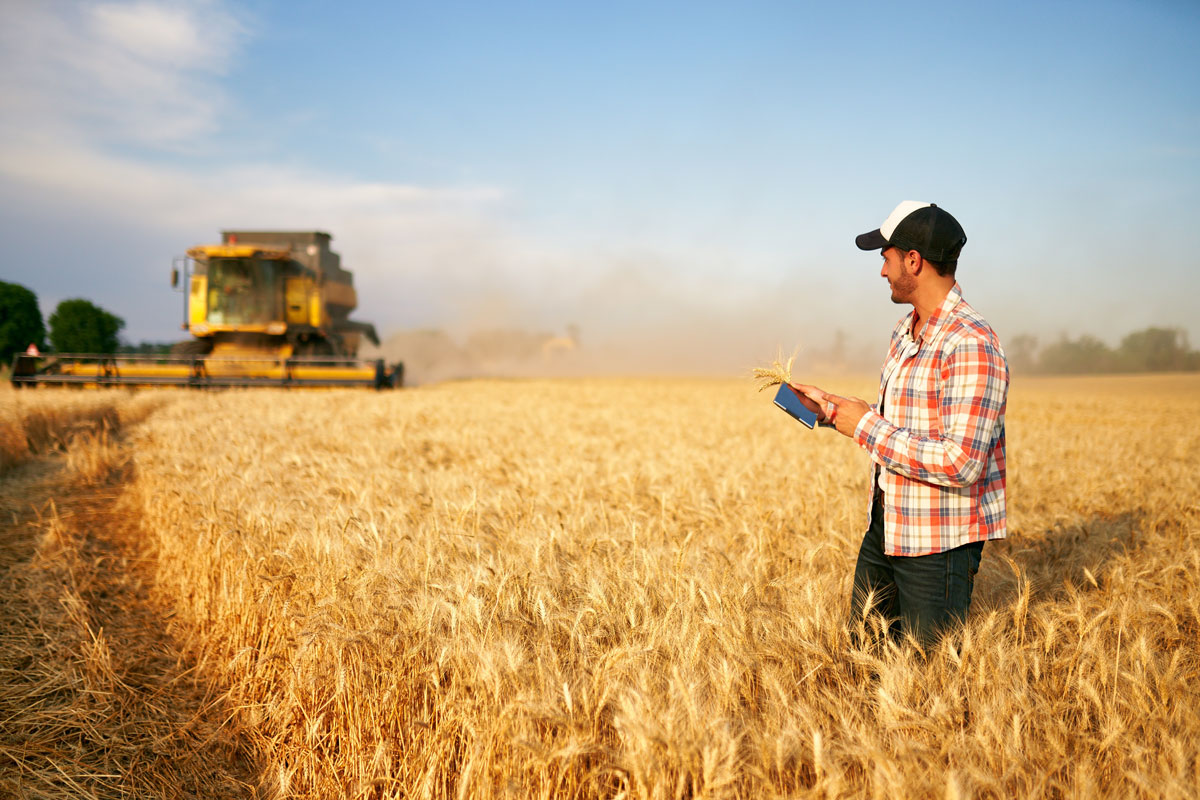
To this end, we will work cooperatively in a multiactor approach framework with all actors in the food production systems chain, from farmers to consumers, industry, investors and policy makers, in order to develop systemic solutions that guarantee their implementation and solve the real problems and needs of society.
A project to lead food production systems towards greater resilience and sustainability
Our implication in the initiative M4SF
Our collaboration in this initiative aims to enhance our understanding and management of soil, plant, and gut microbiomes to boost agricultural performance, improve nutritional quality, and support sustainable food trends. The european projects implicated in this initiative are : Tribiome, Pimento, Domino, Wheatbiome, Healthferm, Microbiome4Soy and Microbe.
Our partners

Our news & blog
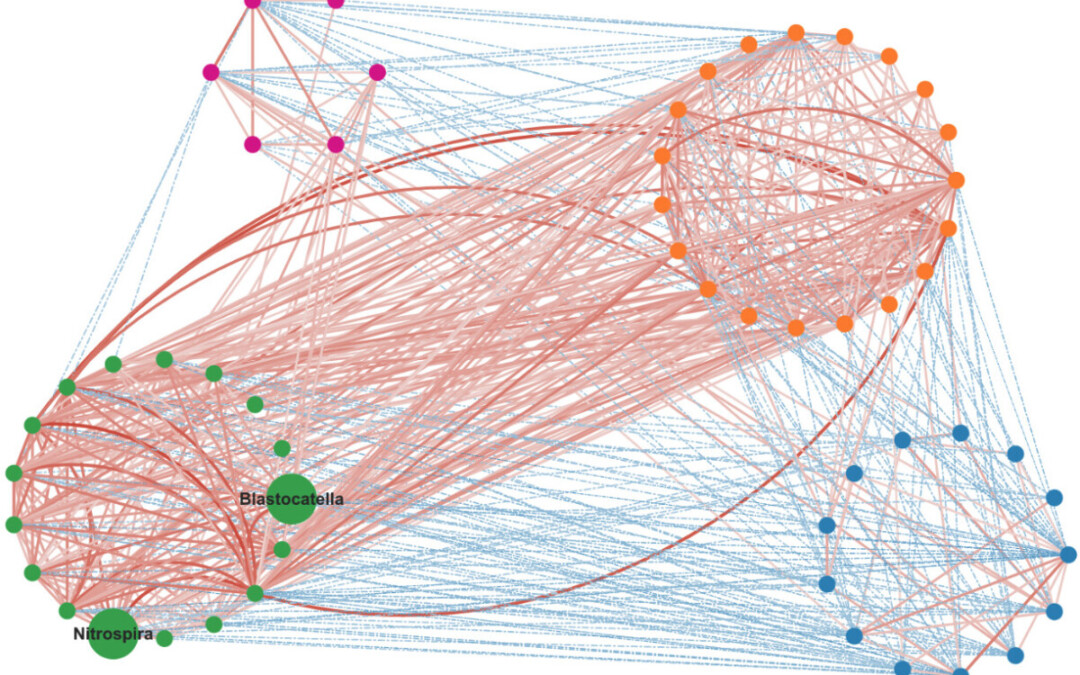
Inside rhizosphere microbiomes : the microbial interactions shaping climate-resilient agriculture
Wiggum plot representing the correlations of each selected genera in the 4 Co-Abundance Groups for the Triticum Durum rhizosphere samples…
Safe-by-Design Plant Modulators
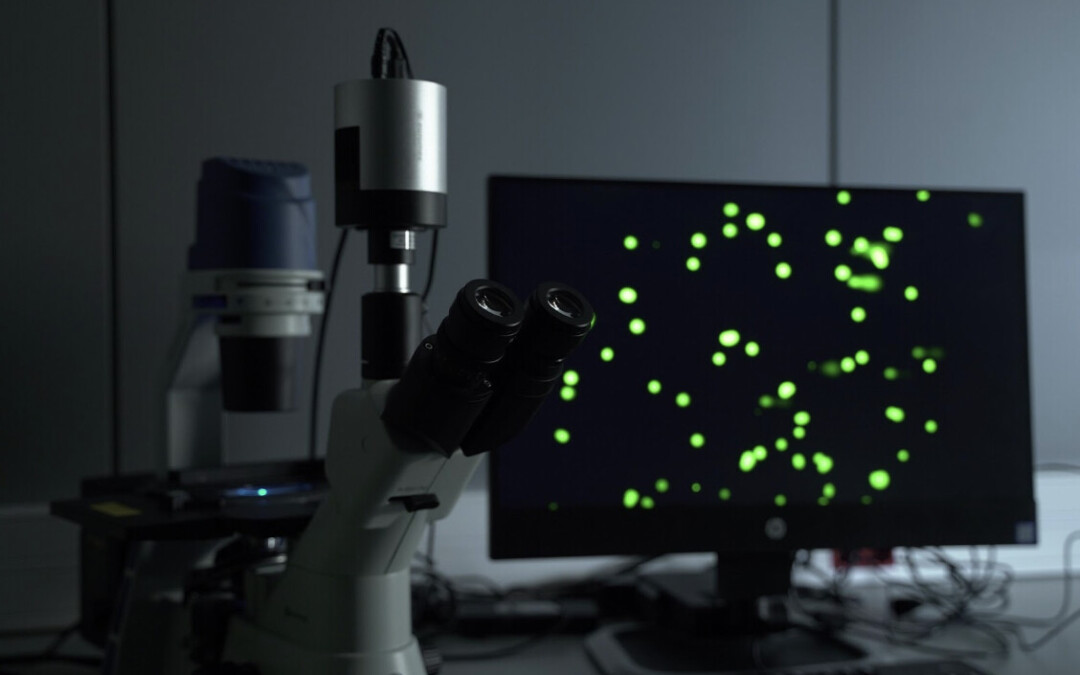
Safe-by-Design Plant Modulators TRIBIOME project is exploring powerful new strategies to modulate microbiomes, which are the complex communities of microorganisms…
ValGenetics and the importance of validating the function of the microbiome
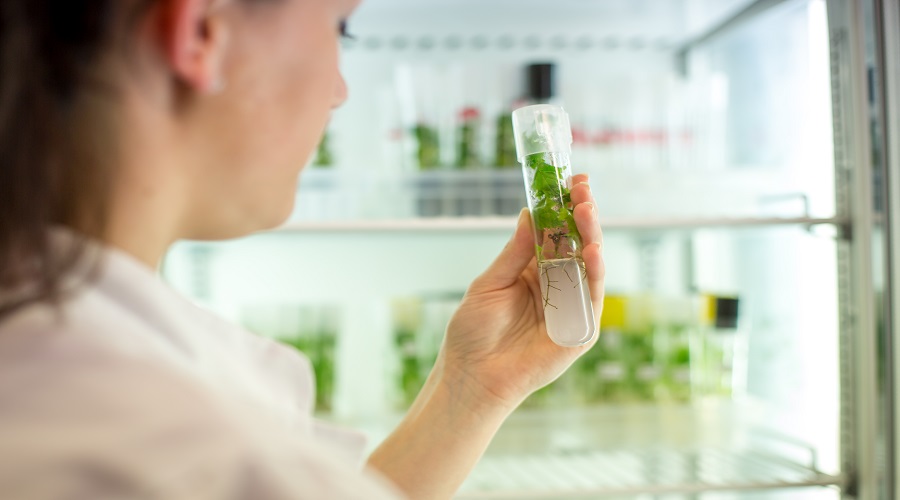
How to ensure a sustainable and healthy food model while the global population continues growing? This is one of the…
Soil and rhizosphere microbiomes are key components to counteract drought effects
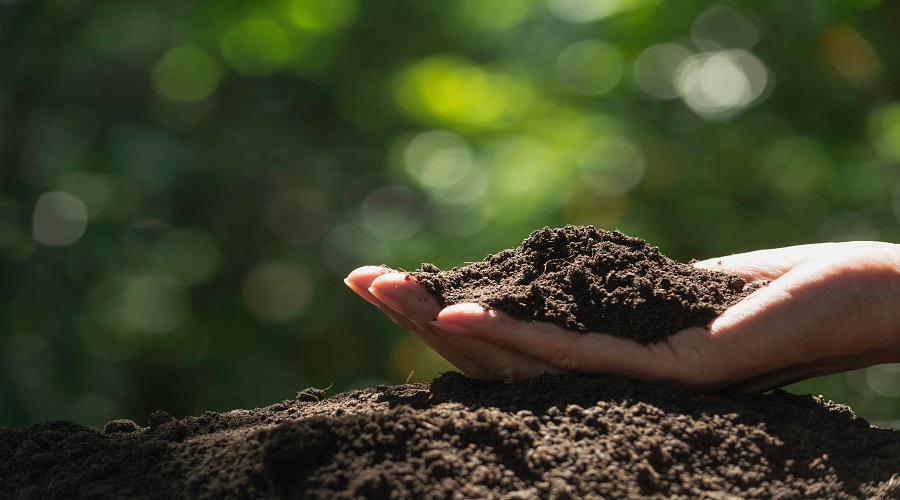
The agricultural sector is responsible for about 75% of the total global consumption of water. Global climate changes are predicted…
Wheat rhizosphere modulates the microbiome diversity and community structure to enhance plant health
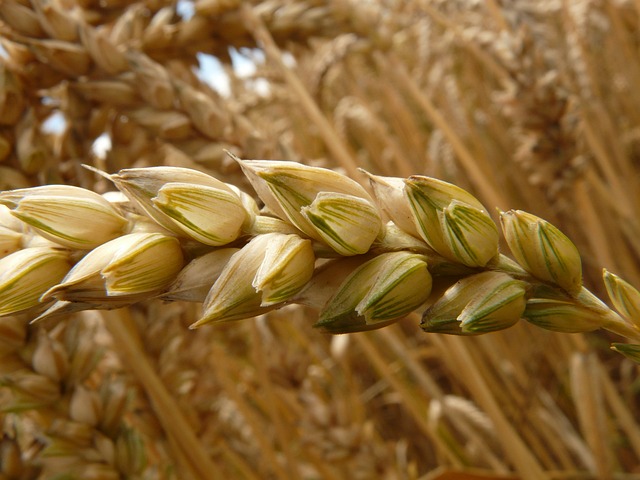
Wheat is the second most important grain crop produced in South Africa, playing a significant role in both cultural and…

Midpoint of the project: the ways to a more sustainable agriculture through microbiome innovation
Agriculture is key to address global challenges like climate change, soil degradation, and food security. The Tribiome project, is delivering…