
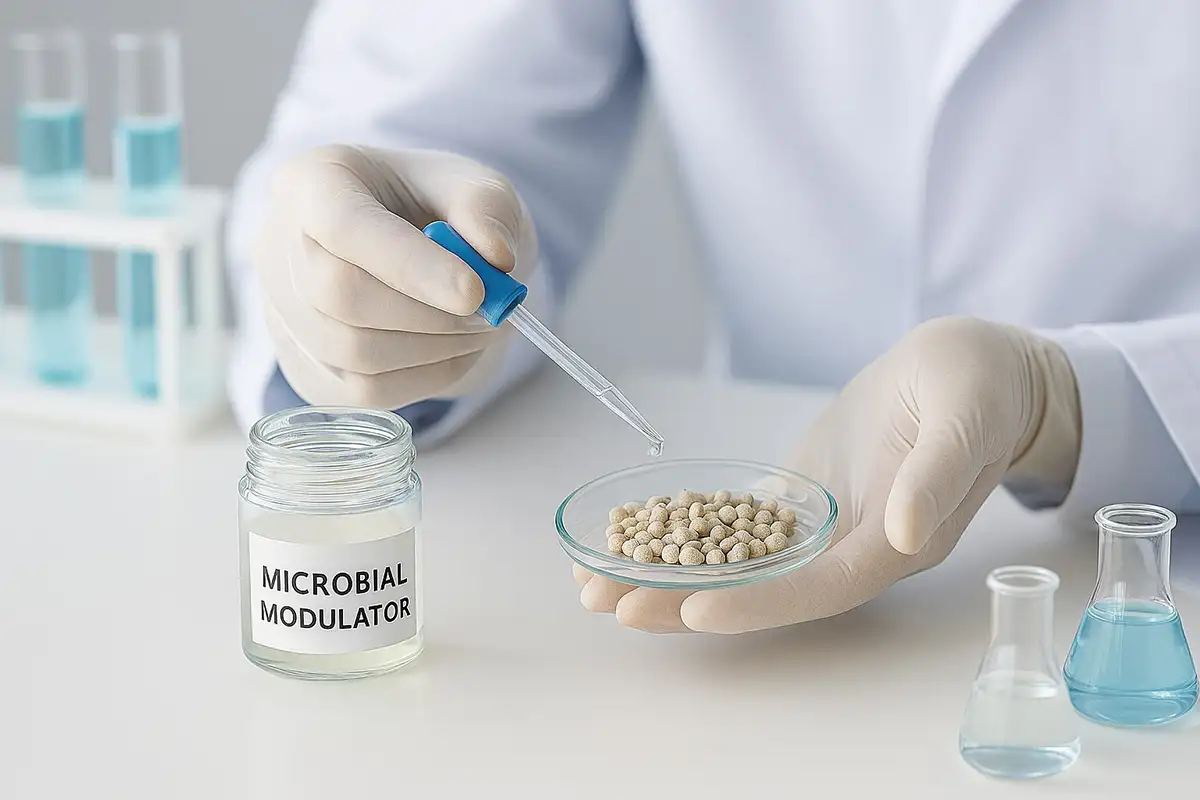
Soil microbiomes and mineral nutrition each play essential roles in crop performance. TRIBIOME explores how bringing these two worlds together can enhance resilience, efficiency, and sustainability in wheat production.
Why bring microbes and minerals together?
Microbial communities in soil play a key role in nutrient cycling by enhancing nitrogen transformations, improving phosphorus solubilisation, and supporting more efficient nutrient uptake, which in turn helps reduce nutrient leaching and gaseous emissions associated with fertilisation.
Mineral fertilisers, on the other hand, provide precise nutrient delivery that supports reliable crop growth.
Integrating microbial modulators with mineral fertilisers allows these complementary strengths to work together, enhancing nutrient uptake, improving the efficiency with which supplied nutrients are used, and helping crops cope with stress conditions, key priorities within TRIBIOME’s agricultural objectives.
Fertiberia’s role: bridging innovation and practical application
As an industrial partner in the TRIBIOME consortium, Fertiberia brings its expertise in mineral fertilisers to explore how microbial modulators can be effectively integrated into nutrient delivery systems.
Once potential combinations are identified, the resulting advanced fertiliser prototypes are evaluated in terms of compatibility, stability, and functional performance, ensuring that microbial modulators remain active and effective when delivered through mineral formulations. This work supports TRIBIOME’s broader multiactor approach, which connects researchers, industry, farmers, and other stakeholders to cocreate solutions that address real needs across the food system.
Towards more resilient crop nutrition
The combination of microbial modulators and mineral fertilisers opens new pathways for sustainable agriculture. By leveraging natural microbial processes alongside reliable mineral nutrition, this approach contributes to TRIBIOME’s mission of developing resilient, climateadapted food production systems with lower environmental impact.
As the project progresses, these insights will support healthier crops, improved resource efficiency, and a more sustainable future for the agrifood chain.